
Evaluating Construction ERPs in KSA: Connecting Project Accounting to ZATCA Phase 2
For a Saudi contractor, choosing an ERP is not simply an accounting software decision.
Consider a contractor in Riyadh preparing for another ZATCA e-invoicing integration requirement. Project costs are tracked in one system, retention in another, subcontract commitments in spreadsheets, and payroll sits separately from project accounting.
The company may still be able to produce an invoice. The harder question is whether that invoice reflects what actually happened on the project. That is why ZATCA compliance should not be treated as a feature added after selecting an ERP.
For construction companies, VAT, e-invoicing, payroll, job costing, commitments, billing, and project reporting need to work as one financial workflow. The right construction ERP should make compliance part of how project transactions are captured, approved, billed, and reported.
Generic Accounting Software Can Calculate VAT. Construction ERP Has to Explain the Project.
A standard accounting system can calculate VAT on an invoice. Construction billing requires considerably more context. A contractor may invoice against:
- Progress or milestone payments
- Advance payments
- Retention
- Approved variations and change orders
- Subcontractor costs
- Materials and equipment
- Labor and project expenses
- Multiple jobs or sub-jobs under the same contract
This matters because construction VAT does not operate as an isolated invoice calculation.
ZATCA’s construction-sector VAT guidance treats construction services as a continuous supply of services and sets specific VAT timing rules for progressive payments. Where contracts specify payment due dates at milestones, VAT becomes payable at the due date or when payment is received, whichever comes first. For other progress payments, the relevant trigger is the invoice date or actual payment date, whichever comes first. ZATCA VAT guideline for the contracting sector
The same guidance addresses retention payments directly. It states that retention does not change these rules and that VAT remains due based on the full amount invoiced or the full amount due at the applicable milestone.
That creates an important ERP requirement. The invoice should not exist as an isolated accounting document. It should remain connected to the project contract, billing record, retention, change order, cost transactions, and customer balance. This is where a construction ERP has an advantage over a generic accounting setup. The system can preserve the relationship between the project event and the financial transaction.
ZATCA itself identifies its contracting-sector VAT guideline as covering construction services, tax due dates, tax invoice issuance, and other sector-specific VAT considerations.
What Does ZATCA-Ready Actually Mean for a Construction ERP?
“ZATCA compliant” should not be treated as a checkbox during an ERP evaluation. Saudi Arabia’s e-invoicing program has two phases.
- Phase 1, the Generation Phase, requires taxpayers to generate and store compliant electronic invoices.
- Phase 2, the Integration Phase, introduces additional technical and business requirements and integration with ZATCA systems. Phase 2 has been rolled out in waves since January 1, 2023.
ZATCA’s current technical requirements include electronic invoice data requirements and an XML implementation standard defining the technical syntax and business content of electronic invoices.
For a construction ERP, the important question is therefore not simply: “Does the software support ZATCA e-invoicing?”
Ask instead: “Where does the ZATCA-compliant invoice process begin inside the project workflow?”
A construction ERP should let your team trace the path from the project transaction to billing, VAT, invoice, accounting entry, and customer balance without rebuilding the information manually. That is the difference between an ERP that simply produces a compliant invoice and one that keeps the underlying project financial data connected.
ZATCA’s Latest Wave Shows Why Waiting for the Notification Is Risky
ZATCA continues to expand Phase 2 through taxpayer-specific waves. In its July 24, 2026 announcement for Wave 25, ZATCA stated that the wave covers taxpayers whose VAT-subject revenues exceeded SAR 187,500 during 2022, 2023, 2024, or 2025. Targeted taxpayers must integrate their e-invoicing solutions with the Fatoora platform by February 1, 2027. ZATCA Wave 25 announcement
ZATCA also states that subsequent Phase 2 waves will be communicated to targeted taxpayers at least six months before their integration date.
For contractors, this makes construction ERP readiness a broader question than simply meeting an integration deadline. If your construction ERP software cannot clearly connect project billing, VAT, customer balances, and supporting project transactions today, adding an e-invoicing connection may solve the compliance output without solving the underlying accounting problem.
Payroll Should Feed Project Cost, Not Sit Beside It
Payroll is another area where construction companies need to think beyond compliance. A contractor may have:
- Direct employees
- Expatriate workers
- Overtime and allowances
- Employees working across multiple projects
- Site-based labor
- Subcontract labor
- Different cost codes or activities
The accounting question is straightforward: What did this labor actually cost the project? That requires more than processing payroll.

Timesheets, labor rates, overtime, allowances, and other relevant costs should flow into project accounting so project managers and finance teams can see actual labor cost against budget. WPS and GOSI-related responsibilities should also be considered separately from Saudization or Nitaqat requirements. They are different areas of Saudi workforce and compliance management and should not be treated as one payroll feature.
During an ERP evaluation, ask for a demonstration of the complete workflow:
Employee → Time → Project → Cost Code → Payroll → Project Cost → Margin
If the process depends on exporting spreadsheets and manually reallocating labor costs, the ERP is not giving project accounting the information it needs.
Compliance Does Not Protect a Project That is Already Losing Money
A contractor can produce compliant invoices and still lose money on a project. Why? Because compliance tells you whether financial transactions are being processed according to requirements. It does not automatically tell you whether the project is commercially healthy.
A project can lose margin because:
- Subcontract commitments were not captured early.
- Labor was charged to the wrong project.
- A variation was approved but not billed.
- Retention was not forecast correctly.
- Actual costs exceeded the original budget.
- Procurement costs increased.
- Project managers cannot see committed costs before they become actual expenses.
This is why the most important ERP workflow for a contractor may look like this:
Contract → Budget → Commitment → Cost → Progress Billing → VAT → Invoice → Receivable → Project Margin
Every step should remain connected. If finance can see the invoice but cannot trace it back to the project event, the system is incomplete from a contractor’s perspective. If project management can see costs but cannot connect them to billing and margin, the same problem exists in reverse.
What Should Saudi Contractors Evaluate Before Choosing an ERP?
Instead of comparing feature counts, test the ERP against an actual construction workflow.
1. Project billing
Can the system handle progress billing, advance payments, retention, and approved variations directly from the project?
2. VAT traceability
Can your finance team trace the VAT amount on an invoice back to the underlying project transaction?
3. ZATCA integration
Where does the ZATCA/Fatoora process sit in the invoice workflow? Ask the vendor to demonstrate the actual flow rather than simply confirming that “ZATCA is supported.”
4. Payroll and labor costing
Can payroll and timesheet information be allocated to the correct project, task, or cost code?
5. Commitments
Can the project team see approved subcontract and purchasing commitments before those costs become actual expenses?
6. Project margin
Can management see budget, committed cost, actual cost, forecast, revenue, and projected margin without building a separate spreadsheet?
7. Audit trail
Can a reported amount be traced back to its originating transaction? This final test matters more than a long feature list.
A construction ERP should make it easier to answer: Where did this number come from?
And then: How did it affect the project?
Where ProjectPro Fits
ProjectPro is an AI-powered construction ERP built on Microsoft Dynamics 365 Business Central, with Microsoft 365 Copilot as the intelligence layer.
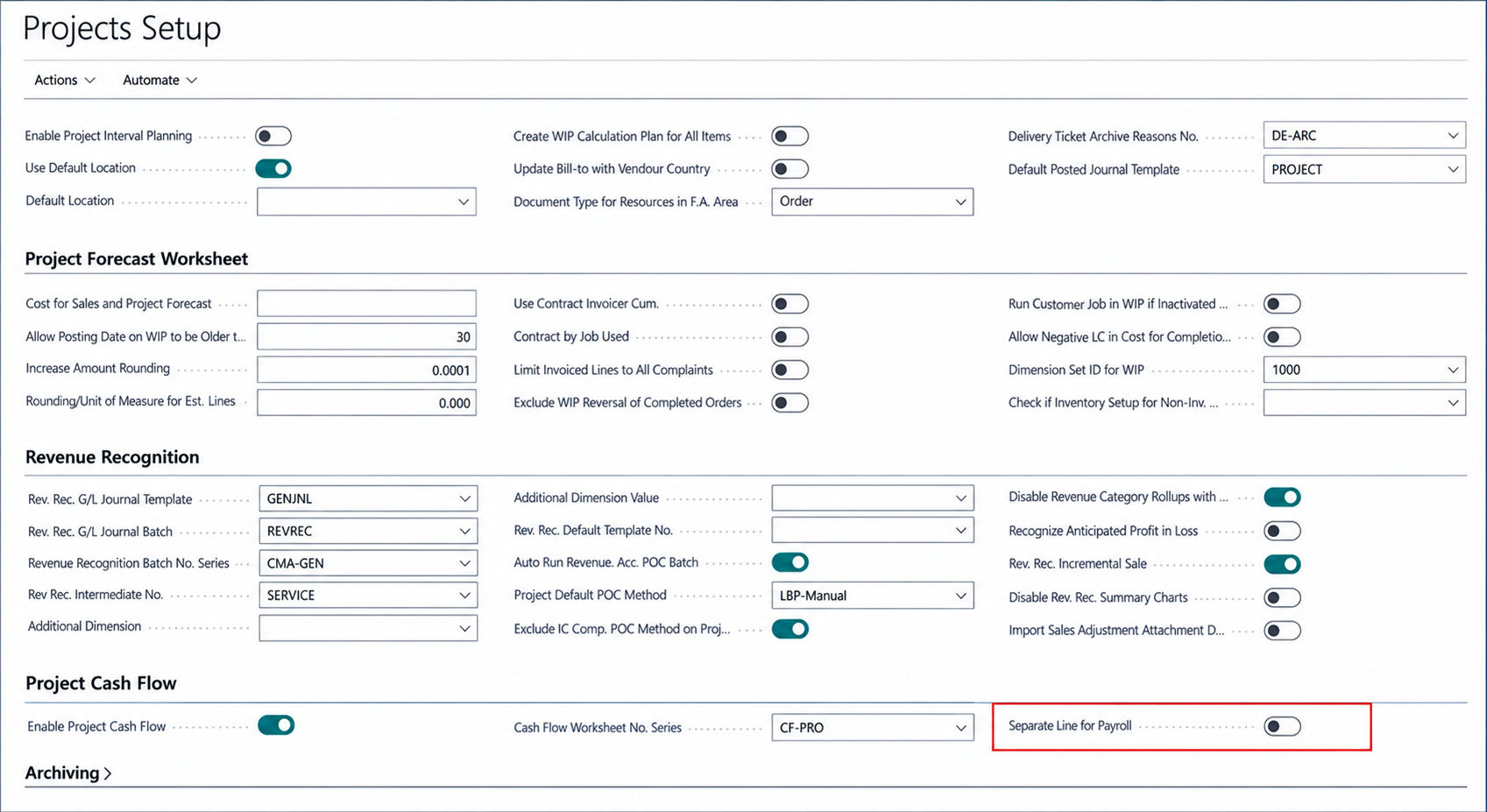
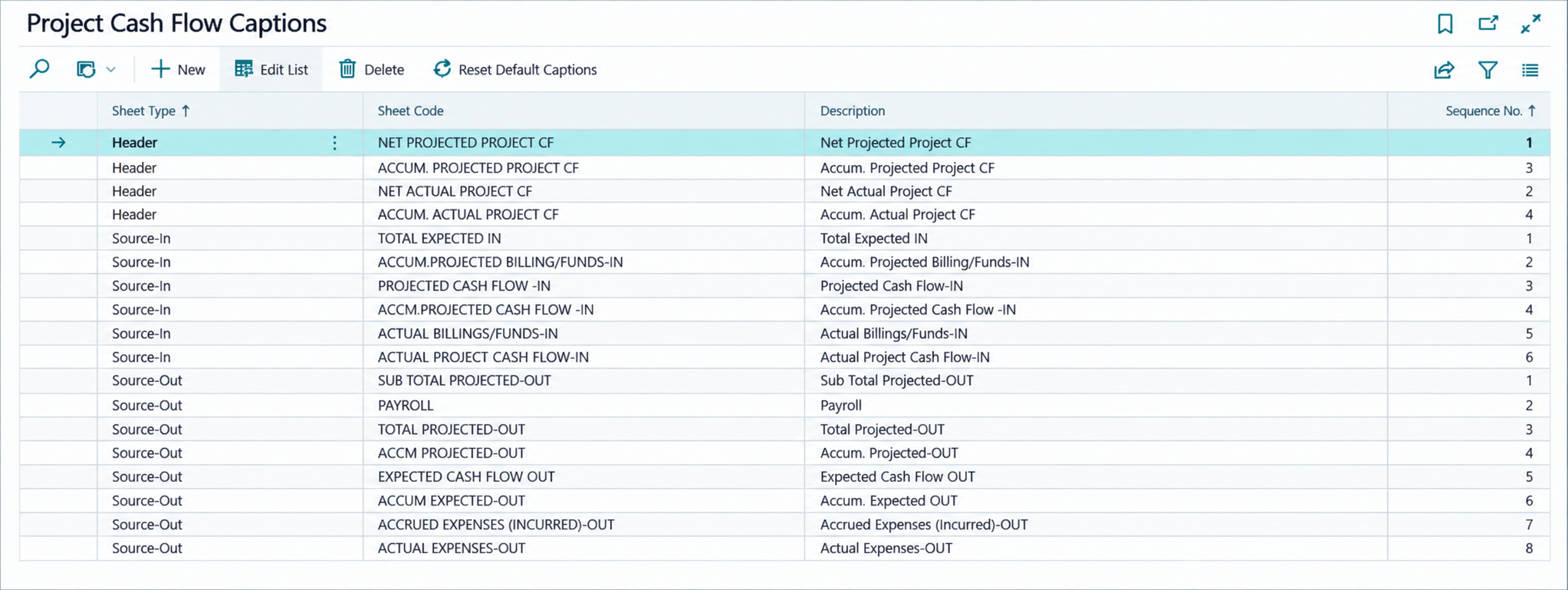
Its construction-focused capabilities cover project accounting, job costing, billing, commitments, and financial management within one platform.
For Saudi contractors evaluating ProjectPro, the implementation discussion should go beyond the product demonstration. The right questions include:
- Saudi VAT configuration
- ZATCA/Fatoora integration approach
- Project billing and retention workflows
- Payroll and workforce integrations
- Local reporting requirements
- Data and implementation scope
- Integration requirements with existing systems
The real test is whether the ERP can run your actual construction workflow without creating a parallel accounting process in spreadsheets.
The Netsmartz View: Start With the Project, Not the Compliance Checklist
ZATCA compliance should be treated as an ERP architecture test, not a separate finance project. Start with one real project. Take its contract value, budget, commitments, costs, progress billing, retention, variations, labor, VAT, invoice, receivable, and projected margin.
Then ask the vendor to connect the entire chain in the construction ERP. The result should be a clear financial trail from the project transaction to the final margin, without duplicate entries, disconnected spreadsheets, or manual reconciliation between project and finance teams.
For Saudi contractors, that is the standard to apply before implementation:
Can the system keep the project financially traceable from contract to final margin while meeting the country’s tax and e-invoicing requirements?
That question will tell you more about ERP readiness than a feature checklist alone.
See How ProjectPro Fits Your Construction Workflow
Don’t evaluate an ERP from a feature checklist. Test your actual contract, billing, retention, commitments, labor costs, VAT, and reporting workflow.
[Book a ProjectPro Workflow Assessment →]
Netsmartz can help you assess the integrations, data flows, construction-specific requirements, and implementation considerations that need to be addressed before moving forward.
FAQs
Look beyond general accounting and VAT functionality. A construction ERP should connect project contracts, budgets, commitments, costs, progress billing, retention, VAT, receivables, payroll-related project costs, and project margin.
The key test is whether finance and project teams can trace a financial result back to the underlying project transaction.
For Wave 25, announced on July 24, 2026, ZATCA identified taxpayers whose VAT-subject revenues exceeded SAR 187,500 during any of 2022, 2023, 2024, or 2025. Targeted taxpayers must integrate their e-invoicing solutions with Fatoora by February 1, 2027.
However, contractors should check their own ZATCA notification and applicable wave rather than assuming that Wave 25 applies to them.
Technically, an external e-invoicing solution can be part of an organization’s architecture. The more important question is whether the integration preserves the connection between project billing, VAT, customer balances, and supporting transactions.
If teams still need spreadsheets to reconcile project billing and accounting after adding e-invoicing, the compliance gap may be addressed while the project-accounting problem remains.
Not necessarily. The important requirement is that relevant payroll and timesheet information can flow reliably into project costing. A contractor should be able to determine the actual labor cost associated with a project, activity, or cost code without repeated manual allocation.
Use an actual project rather than a generic product demonstration.
Test one complete workflow: Contract → Budget → Commitment → Cost → Progress Billing → VAT → Invoice → Receivable → Project Margin
Then test exceptions such as retention, variations, subcontract costs, and labor allocation. If the ERP can handle the workflow with clear traceability and limited manual reconciliation, you have a much stronger basis for evaluating implementation readiness.